How we relate to nature shapes the solutions we create. Across TRANS-lighthouses, European and non-European partners are exploring how different human–nature relations influence the ways Nature-Based Solutions (NbS) are imagined and put into practice. By creating dialogue between scientific, local, Indigenous and eco-feminist knowledge systems, the project highlights the importance of reciprocity, care and plurality of knowledges. This blogpost invites readers to explore the different ways human-nature relations are understood and why plural perspectives matter for more transformative NbS.
Rethinking knowledge in Nature-Based Solutions
How can Nature-Based Solutions (NbS) move beyond a single dominant way of knowing nature?
One of the major conceptual contributions emerging from TRANS-lighthouses is a reflexive framework that links human-nature relations to the plurality of knowledges shaping them. Rather than treating NbS as purely technical interventions, the project asks a deeper question: what kinds of relationships with nature are embedded in the way we design, govern and evaluate these solutions?
Challenging a single story
A central premise of the framework is that human-nature relations are inseparable from the ways knowledge is recognised and legitimised. Dominant Western-centric approaches to sustainability often privilege certain forms of expertise while marginalising others. The project explicitly engages with this challenge, addressing concepts such as epistemicide, the erasure of non-dominant knowledge systems, and ontological struggles between different worldviews.
Rather than assuming one universal reference point, the framework brings multiple knowledge systems into dialogue: Indigenous perspectives emphasise reciprocity, stewardship and relational worldviews, including concepts such as Buen Vivir and kincentric ecology; Eco-feminist approaches foreground care, labour and power, challenging separations between humans and nature and making visible the work of maintaining and repairing shared environments; Critical Global South perspectives question dominant development paradigms and economic assumptions, proposing life-centred and community-rooted approaches.
Within TRANS-lighthouses, these perspectives are not external references. They actively shape how NbS are interpreted, discussed and tested.
Why this matters for practice
This reflection is not intended solely for academic debate. It serves as a shared language for Living Knowledge Labs, enabling practitioners and researchers to: critically assess underlying assumptions; reflect on how practices might evolve; and explore pathways towards more reciprocal and regenerative human–nature relations.
The synergy between conceptual development and global dialogue is a defining feature of TRANS-lighthouses. Across territories, from ecofeminist dialogues to place-based co-design processes, plurality of knowledges is not an abstract principle, but a working method.
NbS, in this perspective, are not only about restoring ecosystems. They are about reconfiguring relationships, between people, knowledge systems and the more-than-human world.
Curious to explore how these perspectives are unfolding across our Living Knowledge Labs and international exchanges?
Discover more on our website and explore our resources: www.trans-lighthouses.eu
Stay tuned as we continue to share comparative insights and evolving practices from across the project.
TRANS-lighthouse glossary
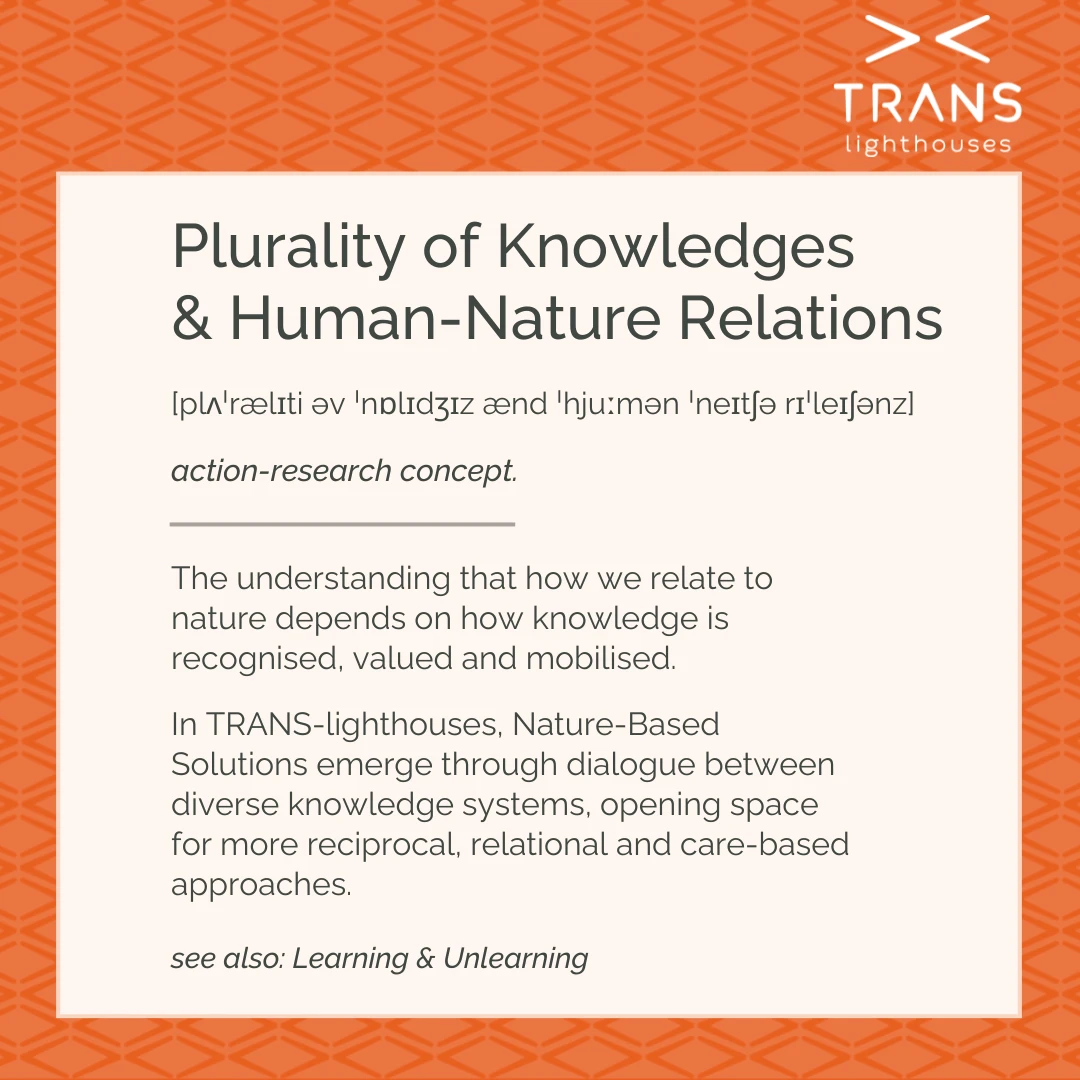
Plurality of Knowledges & Human-Nature Relations
Unlock the language of Nature-Based Solutions: Your essential glossary for the TRANS-lighthouses project!
The featured entry on Plurality of Knowledges & Human-Nature Relations is part of the TRANS-lighthouses glossary — a living resource continuously enriched throughout the project. Explore other entries such as:
Column images
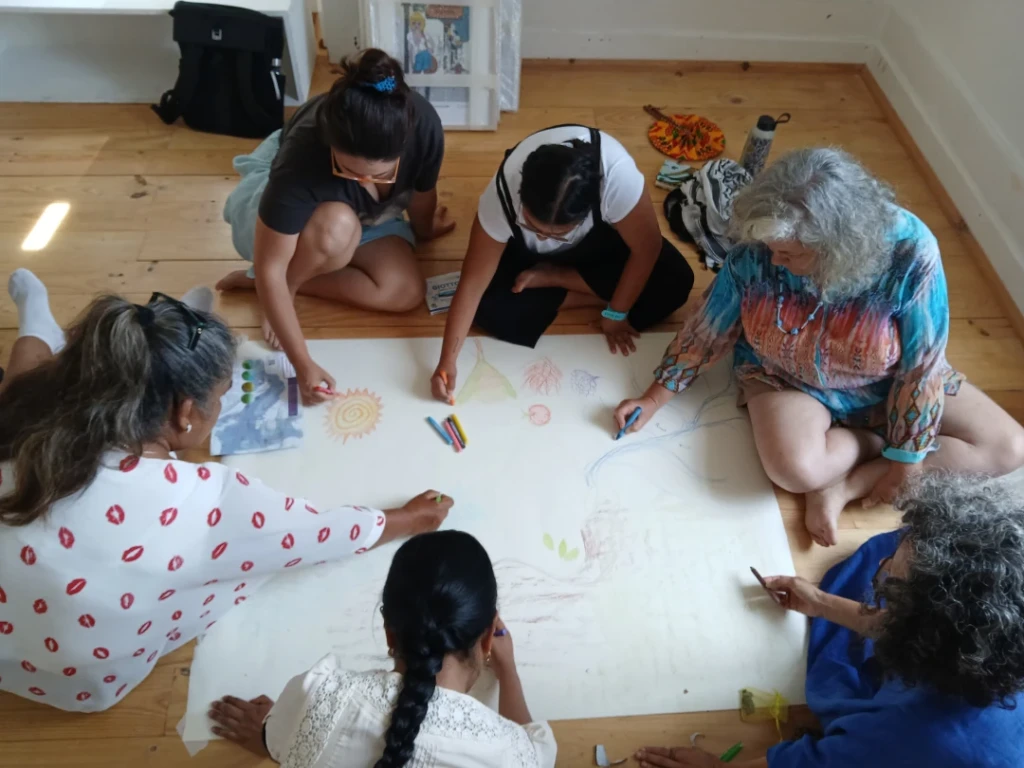
1. “Us and Environmental Care”: South–North ecofeminist dialogues in practice. Caption: Participants during the second workshop “Us and Environmental Care: Experiences from the Bodies and Territories”, held at Casa da Esquina in Coimbra (June 21, 2025), as part of the TRANS-lighthouses International North–South Community of Practice. Co-organised by Dr. Gabriela Merlinsky (Gino Germani Institute, University of Buenos Aires - Associated Partner) and Gustavo García López (CES), the workshop created a deliberative space to share ecofeminist experiences of territorial defense, environmental recomposition and practices of care as nature-based solutions. Credits: Photo by Gustavo Garcia. Source: TRANS-lighthouses project.
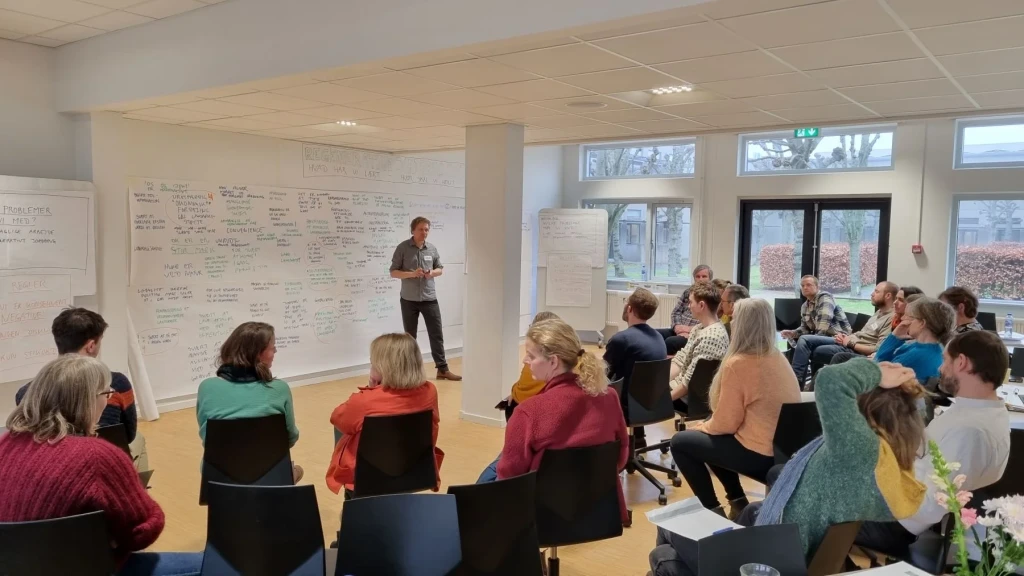
2. Co-design in practice: Plural knowledges in dialogue. Caption: Participants in a Living Knowledge Lab workshop in Roskilde engage in collective reflection and co-design. Such participatory settings embody the plurality of knowledges central to TRANS-lighthouses, where scientific, local and experiential perspectives are brought into dialogue to shape the evolution of Nature-Based Solutions. Credits: Roskilde team - Roskilde University. Source: TRANS-lighthouses project.
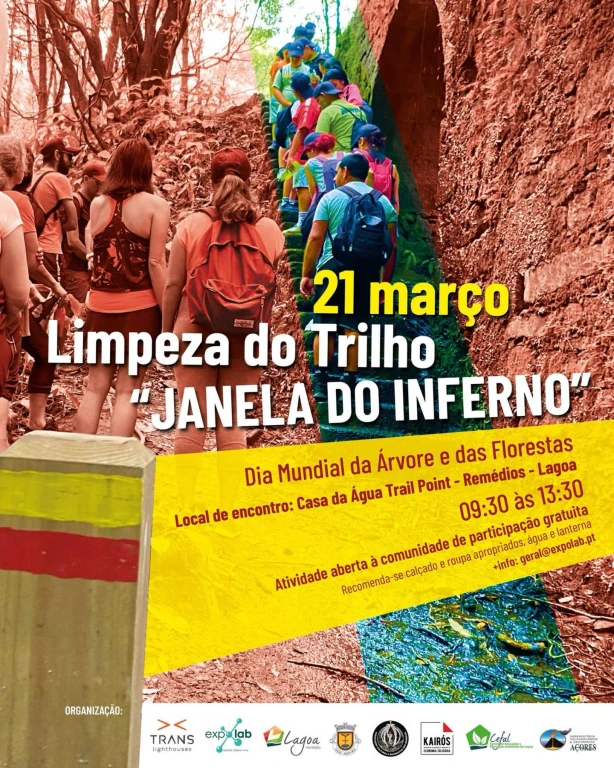
3. Learning with place: Human-nature relations in practice. Caption: Community-led clean-up of the “Janela do Inferno” trail in Lagoa (Azores), reflecting lived human-nature relations and collective environmental responsibility embedded in the TRANS-lighthouses pilot. Credits: Azores team - UAc. Source: Instagram @azores.tlh_janeladoinferno (10 February 2026)
How we relate to nature shapes the solutions we create. Across TRANS-lighthouses, European and non-European partners are exploring how different human–nature relations influence the ways Nature-Based Solutions (NbS) are imagined and put into practice. By creating dialogue between scientific, local, Indigenous and eco-feminist knowledge systems, the project highlights the importance of reciprocity, care and plurality of knowledges. This blogpost invites readers to explore the different ways human-nature relations are understood and why plural perspectives matter for more transformative NbS.
Rethinking knowledge in Nature-Based Solutions
How can Nature-Based Solutions (NbS) move beyond a single dominant way of knowing nature?
One of the major conceptual contributions emerging from TRANS-lighthouses is a reflexive framework that links human-nature relations to the plurality of knowledges shaping them. Rather than treating NbS as purely technical interventions, the project asks a deeper question: what kinds of relationships with nature are embedded in the way we design, govern and evaluate these solutions?
Challenging a single story
A central premise of the framework is that human-nature relations are inseparable from the ways knowledge is recognised and legitimised. Dominant Western-centric approaches to sustainability often privilege certain forms of expertise while marginalising others. The project explicitly engages with this challenge, addressing concepts such as epistemicide, the erasure of non-dominant knowledge systems, and ontological struggles between different worldviews.
Rather than assuming one universal reference point, the framework brings multiple knowledge systems into dialogue: Indigenous perspectives emphasise reciprocity, stewardship and relational worldviews, including concepts such as Buen Vivir and kincentric ecology; Eco-feminist approaches foreground care, labour and power, challenging separations between humans and nature and making visible the work of maintaining and repairing shared environments; Critical Global South perspectives question dominant development paradigms and economic assumptions, proposing life-centred and community-rooted approaches.
Within TRANS-lighthouses, these perspectives are not external references. They actively shape how NbS are interpreted, discussed and tested.
Why this matters for practice
This reflection is not intended solely for academic debate. It serves as a shared language for Living Knowledge Labs, enabling practitioners and researchers to: critically assess underlying assumptions; reflect on how practices might evolve; and explore pathways towards more reciprocal and regenerative human–nature relations.
The synergy between conceptual development and global dialogue is a defining feature of TRANS-lighthouses. Across territories, from ecofeminist dialogues to place-based co-design processes, plurality of knowledges is not an abstract principle, but a working method.
NbS, in this perspective, are not only about restoring ecosystems. They are about reconfiguring relationships, between people, knowledge systems and the more-than-human world.
Curious to explore how these perspectives are unfolding across our Living Knowledge Labs and international exchanges?
Discover more on our website and explore our resources: www.trans-lighthouses.eu
Stay tuned as we continue to share comparative insights and evolving practices from across the project.
TRANS-lighthouse glossary
Plurality of Knowledges & Human-Nature Relations
Unlock the language of Nature-Based Solutions: Your essential glossary for the TRANS-lighthouses project!
The featured entry on Plurality of Knowledges & Human-Nature Relations is part of the TRANS-lighthouses glossary — a living resource continuously enriched throughout the project. Explore other entries such as:
Column images
1. “Us and Environmental Care”: South–North ecofeminist dialogues in practice. Caption: Participants during the second workshop “Us and Environmental Care: Experiences from the Bodies and Territories”, held at Casa da Esquina in Coimbra (June 21, 2025), as part of the TRANS-lighthouses International North–South Community of Practice. Co-organised by Dr. Gabriela Merlinsky (Gino Germani Institute, University of Buenos Aires - Associated Partner) and Gustavo García López (CES), the workshop created a deliberative space to share ecofeminist experiences of territorial defense, environmental recomposition and practices of care as nature-based solutions. Credits: Photo by Gustavo Garcia. Source: TRANS-lighthouses project.
2. Co-design in practice: Plural knowledges in dialogue. Caption: Participants in a Living Knowledge Lab workshop in Roskilde engage in collective reflection and co-design. Such participatory settings embody the plurality of knowledges central to TRANS-lighthouses, where scientific, local and experiential perspectives are brought into dialogue to shape the evolution of Nature-Based Solutions. Credits: Roskilde team - Roskilde University. Source: TRANS-lighthouses project.
3. Learning with place: Human-nature relations in practice. Caption: Community-led clean-up of the “Janela do Inferno” trail in Lagoa (Azores), reflecting lived human-nature relations and collective environmental responsibility embedded in the TRANS-lighthouses pilot. Credits: Azores team - UAc. Source: Instagram @azores.tlh_janeladoinferno (10 February 2026)