Imagine schools where young people do more than learn about sustainability: they help govern it.
Working across diverse European contexts, the TRANS-lighthouses project brought together young people, educators and local actors to rethink how schools and communities shape Nature-based Solutions (NbS) together.
Through participatory workshops and dialogue, young people and educational actors reflected on educational co-governance, participation in decision-making and the co-creation of NbS.
This work is documented in "Differences, opportunities and initiatives for youth participation" (Deliverable D4.7), developed within TRANS-lighthouses task on capacity building to amplify youth involvement in re-inventing institutional governance models towards the co-creation of NbS.
The report maps differences, opportunities and initiatives for youth participation in formal and non-formal educational contexts and examines young people’s contributions to: educational co-governance; NbS in curricula; and preparation for NbS-related jobs.
Different contexts, a shared question
The work took place in very different educational settings: an elementary and secondary school in Barcelos (Portugal), university students in Cáceres (Spain), and a regenerative farming school in Roskilde (Denmark). These contexts brought different educational levels, institutional settings and forms of learning into the discussion on participation, co-governance and sustainability.
A shared point of departure was the question: “If it were up to us…”.
Within the Youth Manifesto exercise, students were asked to consider who should have the authority to create and enforce rules, how decisions should be communicated, what resources are needed to create participation, what is lacking to instigate participation, and what children and young people expect from their involvement in decision-making. They were also asked how nature should participate in the decision-making process.
The process was adapted to the different contexts and age groups involved. These adaptations made it possible to collect relevant insights into youth participation and co-governance of NbS, while reducing strict comparability and highlighting the need for flexibility when working with diverse institutional and territorial realities.
Barcelos: reimagining participation at school
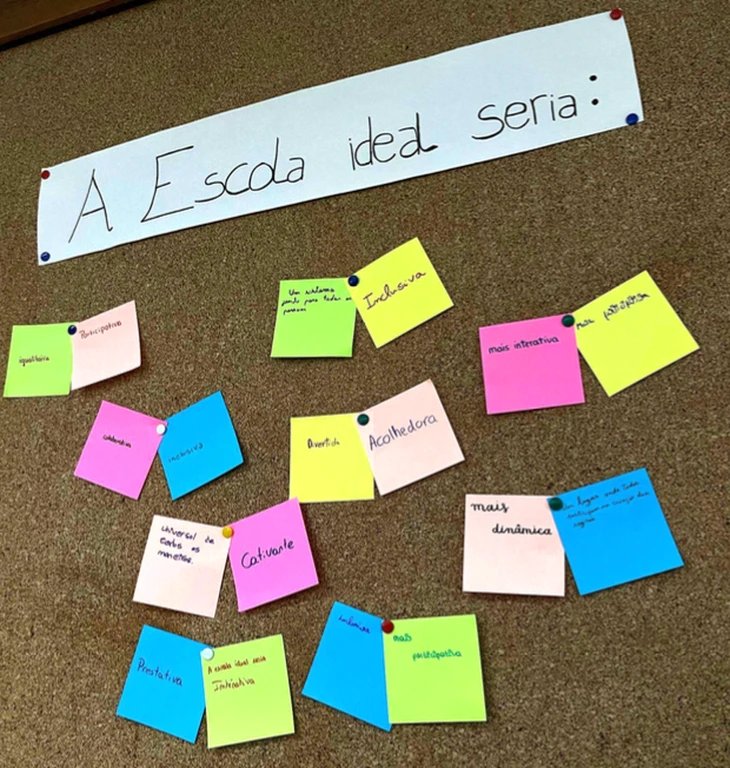
In Barcelos, students demonstrated a strong critical awareness of the limited scope of their participation in school governance. They identified the dominant role of the Board of Directors, the General Council and the Ministry of Education, and described decision-making as often unilateral, with insufficient active listening within the school community.
At the same time, they expressed a desire for a more inclusive, participatory, collaborative and democratic school. Their proposals included student assemblies and unions and accessible communication channels. Nature was viewed as an essential yet underrepresented element in school life, perceived more as a theme than as an active component of educational decision-making.
Cáceres: “If it were up to us…”
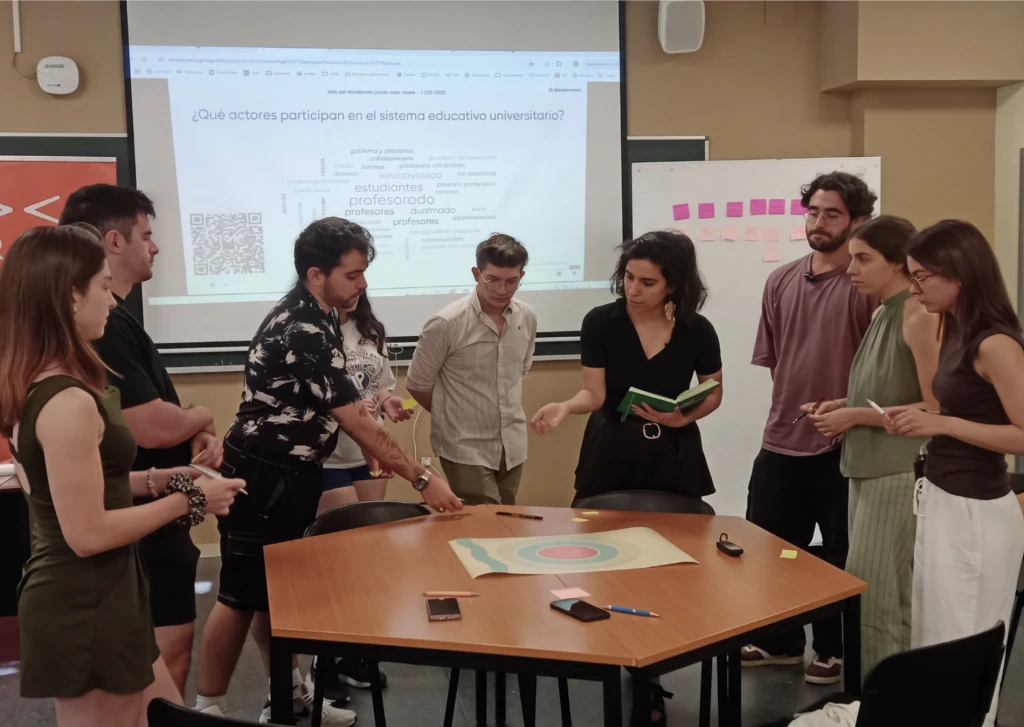
In Cáceres, the first workshop ended with a participatory dynamic of collective reflection, through which students developed an “If it were up to us…” manifesto gathering their shared visions and possible solutions on participation.
They argued that participation should generate real and lasting changes, supported by spaces for student participation, accessible and visible channels of representation, good information dissemination and channels between actors with decision-making power and actors with only an opinion. They also called for student representative bodies to have real participation in the design and implementation of rules, based on students’ real needs and interests.
Roskilde: a living manifesto
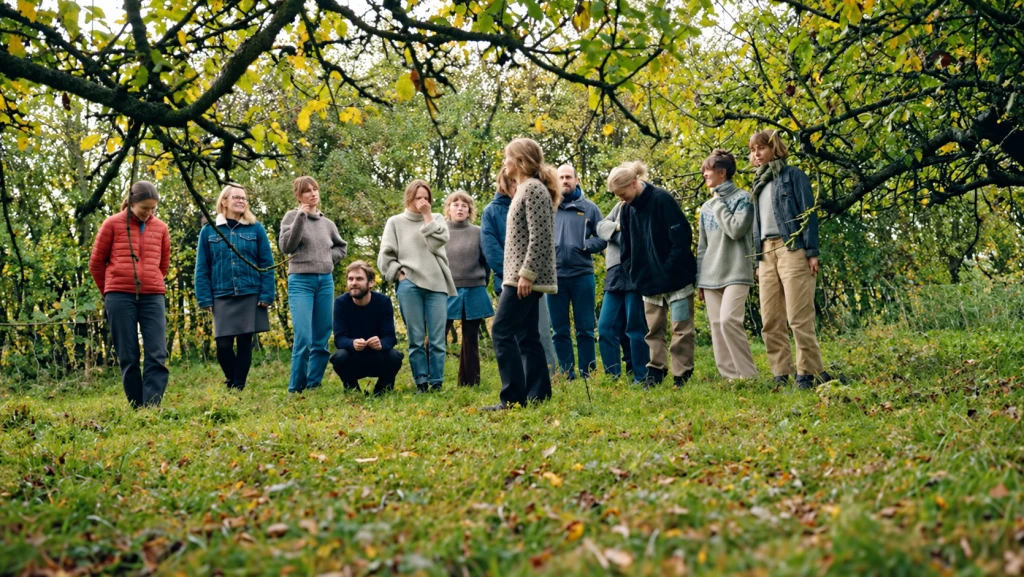
In Roskilde, the work was developed with Jordbrugsskolen, the Regenerative Farming School, adapting the common workshop framework into a video-based reflective exercise. The video documented students’ and teachers’ reflections on learning, autonomy and cooperation, while the school itself was presented as a “tool for change”, combining scientific knowledge, soil biology, community-based learning and a continuous exchange between theory and practice.
The experience highlights learning by doing, freedom of educational choice, network-building and shared responsibility. In this sense, the video itself operates as a living manifesto, expressing values through experience rather than formal statements, and embodies co-governance and youth agency in practice.
From different processes to a Youth Manifesto
The report "Differences, opportunities and initiatives for youth participation" (Deliverable D4.7) brings these different experiences together under the Youth Manifesto for Co-Governance. The Manifesto systematises insights from the participatory work and observation process, reflecting young people’s perspectives on participation and decision-making.
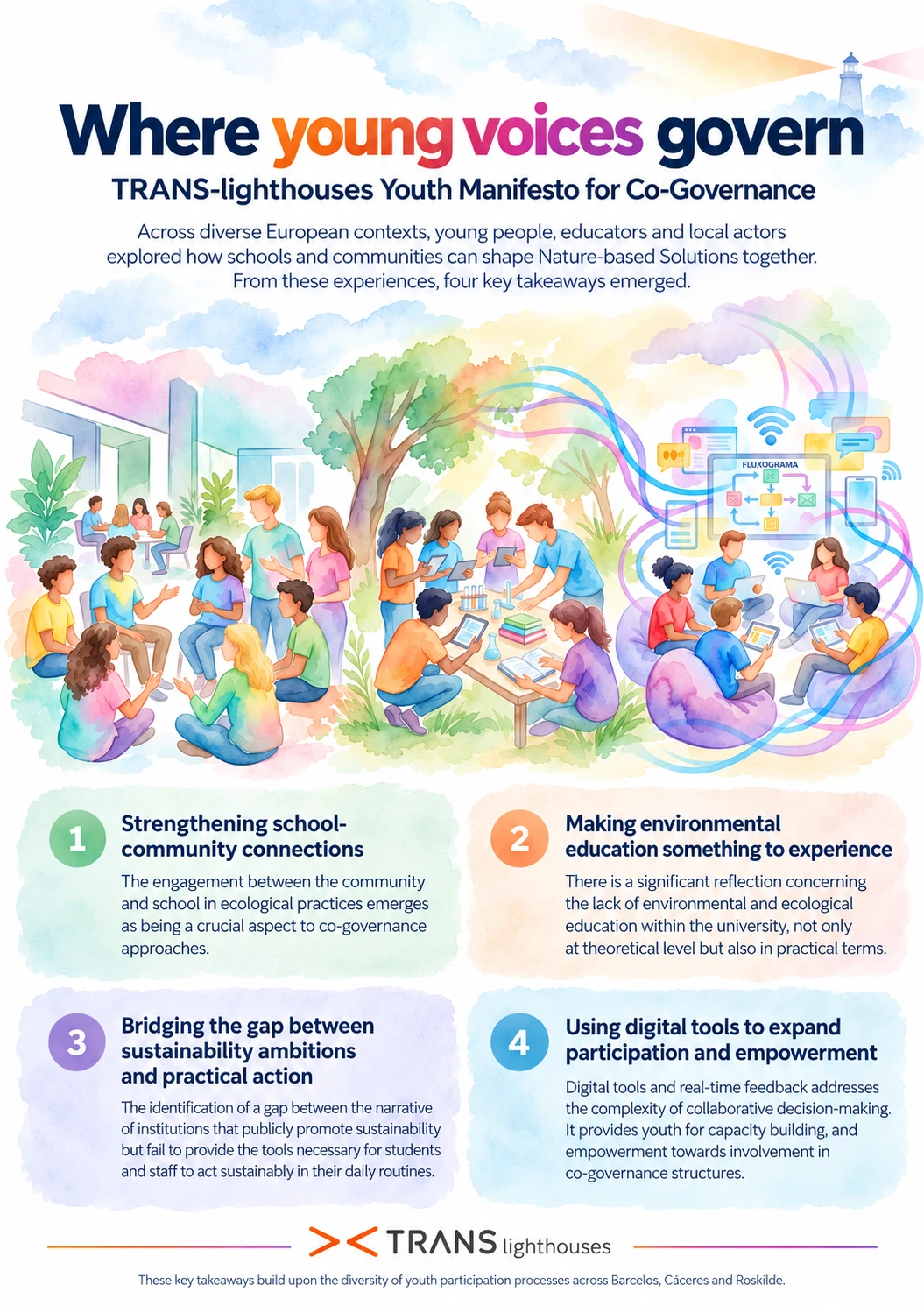
From this work, four key takeaways emerge, the four principles highlighted in our featured poster: 1. Strengthening school-community connections; 2. Making environmental education something to experience; 3. Bridging the gap between sustainability ambitions and practical action; 4. Using digital tools to expand participation and empowerment.
From having a voice to having influence
Across the observation process, one point emerges particularly clearly: students’ voices should not only be heard, but effectively respected and acknowledged in decisions. Students express not only the aspiration to be heard, but to see their voice reflected in real practices and decisions.
The findings point to the need for meaningful engagement as opposed to passive inclusion, in which students may be heard but are not determinant in final decisions regarding issues that affect their lives. Transparent, informative and engaging communication channels are part of the conditions for strengthening youth participation in decision-making processes and institutional bodies.
The Manifesto principles can inspire schools, municipalities and communities across Europe to make youth participation part of everyday governance.
We invite you to make it possible.
Featured image
Column images
2. Debating participation in educational governance. Caption: University of Extremadura students discuss participation and decision-making during Workshop 1. The collective reflection explored who participates, how students see their own role in decision-making and the conditions needed for their voices to have greater influence. Source: TRANS-lighthouses Deliverable D4.7 - Differences, opportunities and initiatives for youth participation, Figure 19, Workshop 1 Cáceres - Debating Participation. Credits: University of Extremadura (UEx) / TRANS-lighthouses.
3. Shared knowledge in practice: regenerative farming learning in Roskilde. Caption: A still from the participatory video developed with the Regenerative Farming School, illustrating collective learning, field-based observation and peer exchange. The video-based exercise connected theory and practice and explored how regenerative farming education can support shared learning, cooperation and socio-ecological transformation. Source: TRANS-lighthouses Deliverable D4.7 - Differences, opportunities and initiatives for youth participation, Figure 36, Roskilde - Screenshots of the video. Credits: RUC – Roskilde University / TRANS-lighthouses.
Imagine schools where young people do more than learn about sustainability: they help govern it.
Working across diverse European contexts, the TRANS-lighthouses project brought together young people, educators and local actors to rethink how schools and communities shape Nature-based Solutions (NbS) together.
Through participatory workshops and dialogue, young people and educational actors reflected on educational co-governance, participation in decision-making and the co-creation of NbS.
This work is documented in "Differences, opportunities and initiatives for youth participation" (Deliverable D4.7), developed within TRANS-lighthouses task on capacity building to amplify youth involvement in re-inventing institutional governance models towards the co-creation of NbS.
The report maps differences, opportunities and initiatives for youth participation in formal and non-formal educational contexts and examines young people’s contributions to: educational co-governance; NbS in curricula; and preparation for NbS-related jobs.
Different contexts, a shared question
The work took place in very different educational settings: an elementary and secondary school in Barcelos (Portugal), university students in Cáceres (Spain), and a regenerative farming school in Roskilde (Denmark). These contexts brought different educational levels, institutional settings and forms of learning into the discussion on participation, co-governance and sustainability.
A shared point of departure was the question: “If it were up to us…”.
Within the Youth Manifesto exercise, students were asked to consider who should have the authority to create and enforce rules, how decisions should be communicated, what resources are needed to create participation, what is lacking to instigate participation, and what children and young people expect from their involvement in decision-making. They were also asked how nature should participate in the decision-making process.
The process was adapted to the different contexts and age groups involved. These adaptations made it possible to collect relevant insights into youth participation and co-governance of NbS, while reducing strict comparability and highlighting the need for flexibility when working with diverse institutional and territorial realities.
Barcelos: reimagining participation at school
In Barcelos, students demonstrated a strong critical awareness of the limited scope of their participation in school governance. They identified the dominant role of the Board of Directors, the General Council and the Ministry of Education, and described decision-making as often unilateral, with insufficient active listening within the school community.
At the same time, they expressed a desire for a more inclusive, participatory, collaborative and democratic school. Their proposals included student assemblies and unions and accessible communication channels. Nature was viewed as an essential yet underrepresented element in school life, perceived more as a theme than as an active component of educational decision-making.
Cáceres: “If it were up to us…”
In Cáceres, the first workshop ended with a participatory dynamic of collective reflection, through which students developed an “If it were up to us…” manifesto gathering their shared visions and possible solutions on participation.
They argued that participation should generate real and lasting changes, supported by spaces for student participation, accessible and visible channels of representation, good information dissemination and channels between actors with decision-making power and actors with only an opinion. They also called for student representative bodies to have real participation in the design and implementation of rules, based on students’ real needs and interests.
Roskilde: a living manifesto
In Roskilde, the work was developed with Jordbrugsskolen, the Regenerative Farming School, adapting the common workshop framework into a video-based reflective exercise. The video documented students’ and teachers’ reflections on learning, autonomy and cooperation, while the school itself was presented as a “tool for change”, combining scientific knowledge, soil biology, community-based learning and a continuous exchange between theory and practice.
The experience highlights learning by doing, freedom of educational choice, network-building and shared responsibility. In this sense, the video itself operates as a living manifesto, expressing values through experience rather than formal statements, and embodies co-governance and youth agency in practice.
From different processes to a Youth Manifesto
The report "Differences, opportunities and initiatives for youth participation" (Deliverable D4.7) brings these different experiences together under the Youth Manifesto for Co-Governance. The Manifesto systematises insights from the participatory work and observation process, reflecting young people’s perspectives on participation and decision-making.
From this work, four key takeaways emerge, the four principles highlighted in our featured poster: 1. Strengthening school-community connections; 2. Making environmental education something to experience; 3. Bridging the gap between sustainability ambitions and practical action; 4. Using digital tools to expand participation and empowerment.
From having a voice to having influence
Across the observation process, one point emerges particularly clearly: students’ voices should not only be heard, but effectively respected and acknowledged in decisions. Students express not only the aspiration to be heard, but to see their voice reflected in real practices and decisions.
The findings point to the need for meaningful engagement as opposed to passive inclusion, in which students may be heard but are not determinant in final decisions regarding issues that affect their lives. Transparent, informative and engaging communication channels are part of the conditions for strengthening youth participation in decision-making processes and institutional bodies.
The Manifesto principles can inspire schools, municipalities and communities across Europe to make youth participation part of everyday governance.
We invite you to make it possible.
Featured image
Column images
2. Debating participation in educational governance. Caption: University of Extremadura students discuss participation and decision-making during Workshop 1. The collective reflection explored who participates, how students see their own role in decision-making and the conditions needed for their voices to have greater influence. Source: TRANS-lighthouses Deliverable D4.7 - Differences, opportunities and initiatives for youth participation, Figure 19, Workshop 1 Cáceres - Debating Participation. Credits: University of Extremadura (UEx) / TRANS-lighthouses.
3. Shared knowledge in practice: regenerative farming learning in Roskilde. Caption: A still from the participatory video developed with the Regenerative Farming School, illustrating collective learning, field-based observation and peer exchange. The video-based exercise connected theory and practice and explored how regenerative farming education can support shared learning, cooperation and socio-ecological transformation. Source: TRANS-lighthouses Deliverable D4.7 - Differences, opportunities and initiatives for youth participation, Figure 36, Roskilde - Screenshots of the video. Credits: RUC – Roskilde University / TRANS-lighthouses.