In Roskilde, the TRANS-lighthouses rural pilot unfolds sharing practices of regenerative farming shaped by exchange, reflection and collective organisation. At its centre is the Regenerative Farming Association, a network of farmers active across Denmark. Young small-scale farmers, women farmers and experienced producers transitioning away from industrial agriculture come together to rethink cultivation methods and the conditions under which food is produced.
Nature-Based Solutions in agricultural landscapes
Unlike urban pilots where transformation become visible in redesigned public spaces, Roskilde’s change unfolds through agricultural landscapes, cultivation practices, knowledge exchange and rural cooperation.
Regenerative farming within the network is grounded in four core principles: continuous soil cover to protect fertile topsoil and living microorganisms; minimal soil disturbance; support for soil microbiology; integration of livestock into cultivation systems. These principles translate into concrete field practices, from crop rotations to grazing systems that address soil degradation, erosion and biodiversity decline directly at farm level.
From field practice to shared knowledge
Through the pilot, the project works with regenerative farmers to co-create understanding of how these practices can be further enabled in Denmark. It supports farmer-to-farmer exchange, documents practical experience and creates space for structured reflection on how regenerative agriculture evolves under real economic and institutional conditions.
This process is further supported through innovative forms of vocational education. In Roskilde, collaboration with the Regenerative Farming School introduces a learning model that combines theoretical training with farm-based practice, fostering continuous exchange between knowledge and experience. Rather than relying on conventional training formats, the pilot incorporates participatory and reflective approaches, including video-based exercises, through which students and teachers articulate their experiences of learning, autonomy and cooperation. This educational dimension reinforces regenerative farming not only as a set of techniques, but as a collective learning process grounded in networks, experimentation and the central role of soil biology in rethinking agricultural systems.
The emphasis is not only on technique, but on coordination: how farmers learn from one another, how experiences are consolidated and how regenerative approaches are positioned within broader agricultural systems.
Structural tensions and collective reflection
Structural constraints remain part of the picture. Regenerative production often involves higher costs and does not easily align with dominant agri-food structures. Farmers may face economic precarity and risk of exhaustion. Questions persist about how these practices can operate within existing policy frameworks and market environments, including their articulation with municipal nature conservation strategies.
Rather than separating practice from these challenges, the pilot integrates them into collective reflection.
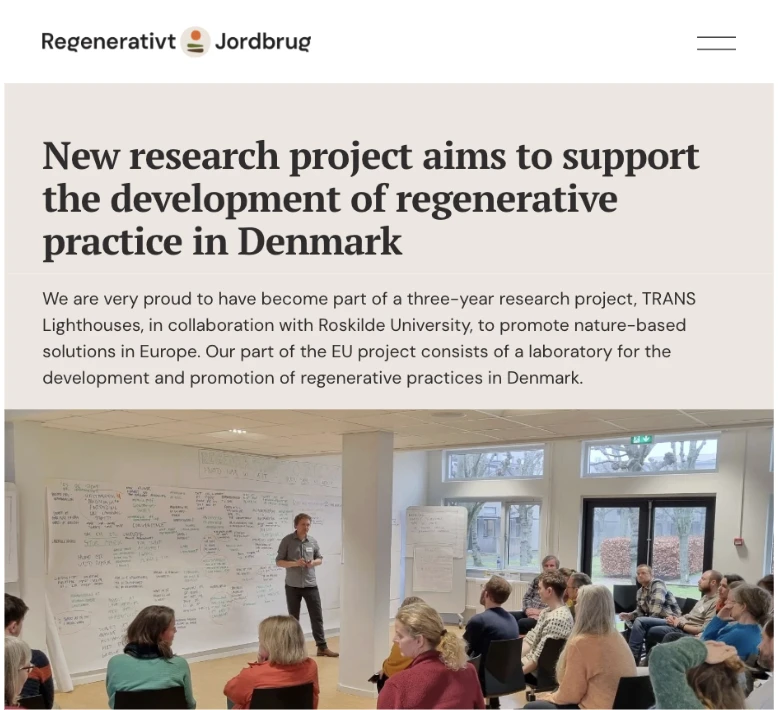
In January 2024, around 30 members gathered at Roskilde University for the workshop “Regenerative Agriculture 2024: What have we learned and where are we going?” There, accumulated experience was examined collectively, challenges were articulated and shared priorities were defined.
Cultivating the Future: School of Regenerative Agriculture, Denmark (Jordbrugsskolen)
Explore the innovative approach of the School of Regenerative Agriculture (Jordbrugsskolen) in Denmark, where the next generation of farmers is being trained in sustainable and regenerative practices. This comprehensive one-year program connects theoretical knowledge with practical experience, emphasizing sustainable methods and the critical role of soil biology.
Listen to students like Anna and Stig share their experiences, and gain insights from founder Sandra Villumsen on the school's commitment to transforming agricultural practices. Through engaging classroom discussions and hands-on internships, witness how this vibrant community is building a network dedicated to a greener future.
Key Highlights: A one-year curriculum with integrated internships; Emphasis on regenerative cultivation methods and soil health; Building a supportive network for aspiring farmers; A scalable model for sustainable change in agriculture.
Where transformation takes root
Roskilde shows how small-scale regenerative agriculture can function simultaneously as a set of field practices; a network of exchange; and a space of collective learning. Transformation happens in the soil, and in the relationships that sustain it.
Discover more about the TRANS-lighthouses project at www.trans-lighthouses.eu
Explore pilot stories on the community platform at www.translighthousescommunity.eu
Featured image
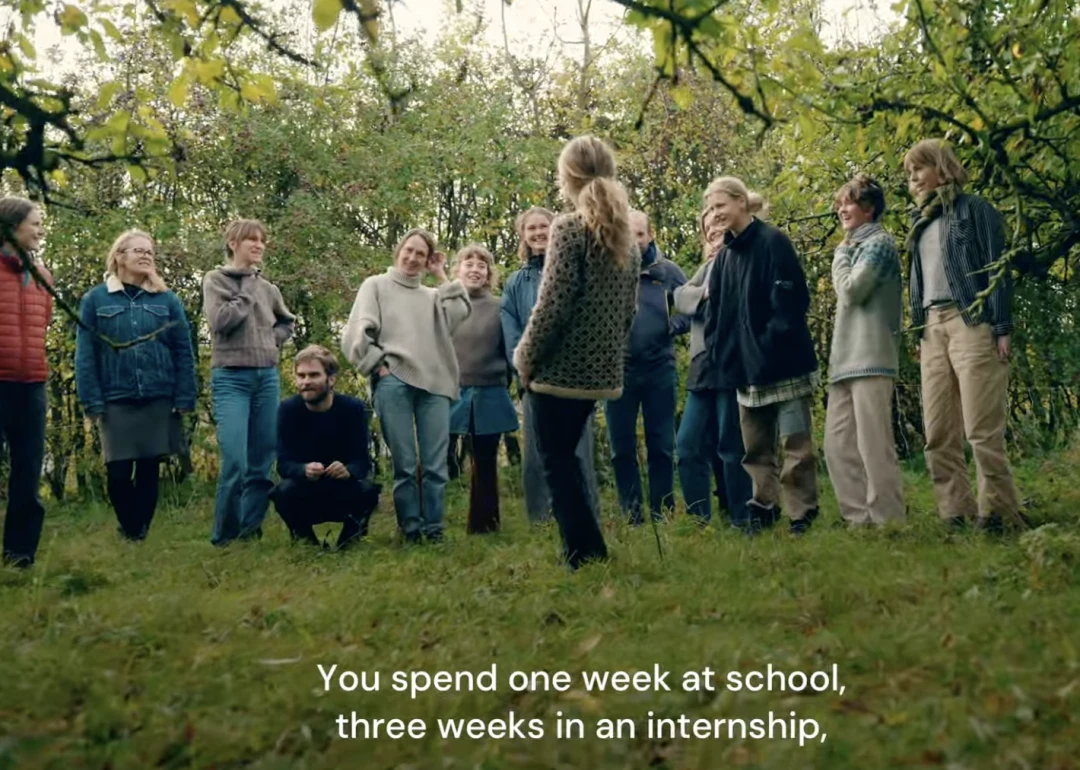
Shared knowledge in practice: Regenerative farming learning in Roskilde. Caption: Screenshots from a participatory video developed within the Regenerative Farming School, illustrating collective learning, field-based observation and collaborative reflection. The images show how vocational education and peer exchange support regenerative farming as a Living Knowledge Lab. Credits: RUC (Roskilde University). Source: TRANS-lighthouses Deliverable D4.7 – Differences, opportunities and initiatives for youth participation
Column images
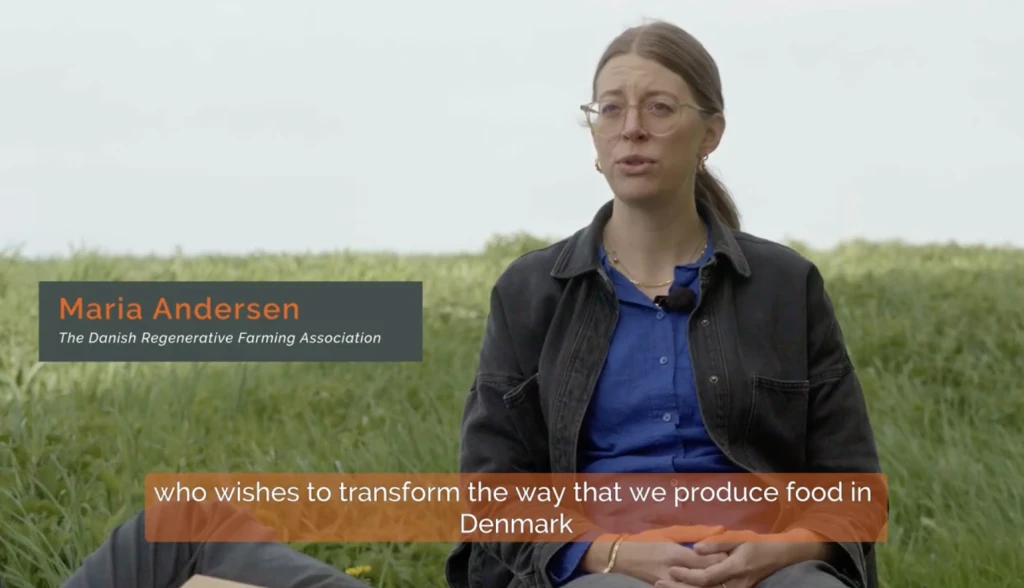
1. Voices from the Regenerative Farming Network. Caption: Maria Andersen from the Danish Regenerative Farming Association discusses the ambition to transform food production in Denmark through regenerative agricultural practices and collective learning within the network. Credits: Viração & Jangada. Source: Video "Regenerative Farming | Roskilde, Denmark” (https://www.instagram.com/p/DTvJ3tzDX8_/)
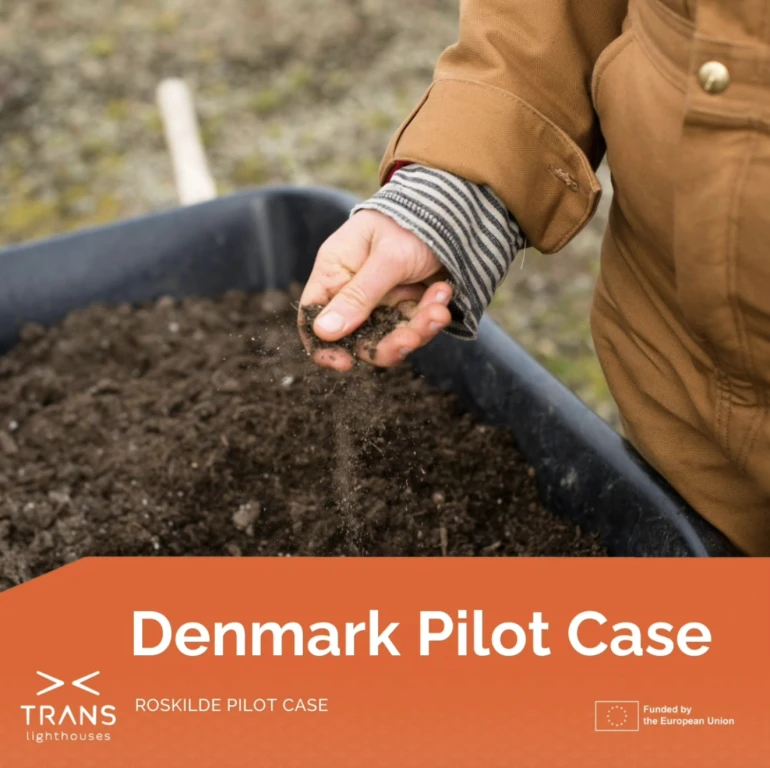
2. Where transformation begins: the soil. Caption: Soil-based regenerative practices lie at the core of the Roskilde pilot, where farmers experiment with continuous soil cover, minimal disturbance and biodiversity-enhancing cultivation methods. Credits: Viração & Jangada. Source: Instagram @translighthouses_community
3. Workshop “Regenerative Agriculture 2024” - Roskilde University. Caption: In January 2024, around 30 members gathered at Roskilde University to reflect on accumulated experience and define priorities for advancing regenerative practices in Denmark. Credits: Regenerativt Jordbrug. Source: Regenerativt Jordbrug’s website - https://www.regenerativ.dk/forskningsprojektmedruc. Original language: Danish. English version automatically generated via Google Translate (Google Chrome).
In Roskilde, the TRANS-lighthouses rural pilot unfolds sharing practices of regenerative farming shaped by exchange, reflection and collective organisation. At its centre is the Regenerative Farming Association, a network of farmers active across Denmark. Young small-scale farmers, women farmers and experienced producers transitioning away from industrial agriculture come together to rethink cultivation methods and the conditions under which food is produced.
Nature-Based Solutions in agricultural landscapes
Unlike urban pilots where transformation become visible in redesigned public spaces, Roskilde’s change unfolds through agricultural landscapes, cultivation practices, knowledge exchange and rural cooperation.
Regenerative farming within the network is grounded in four core principles: continuous soil cover to protect fertile topsoil and living microorganisms; minimal soil disturbance; support for soil microbiology; integration of livestock into cultivation systems. These principles translate into concrete field practices, from crop rotations to grazing systems that address soil degradation, erosion and biodiversity decline directly at farm level.
From field practice to shared knowledge
Through the pilot, the project works with regenerative farmers to co-create understanding of how these practices can be further enabled in Denmark. It supports farmer-to-farmer exchange, documents practical experience and creates space for structured reflection on how regenerative agriculture evolves under real economic and institutional conditions.
This process is further supported through innovative forms of vocational education. In Roskilde, collaboration with the Regenerative Farming School introduces a learning model that combines theoretical training with farm-based practice, fostering continuous exchange between knowledge and experience. Rather than relying on conventional training formats, the pilot incorporates participatory and reflective approaches, including video-based exercises, through which students and teachers articulate their experiences of learning, autonomy and cooperation. This educational dimension reinforces regenerative farming not only as a set of techniques, but as a collective learning process grounded in networks, experimentation and the central role of soil biology in rethinking agricultural systems.
The emphasis is not only on technique, but on coordination: how farmers learn from one another, how experiences are consolidated and how regenerative approaches are positioned within broader agricultural systems.
Structural tensions and collective reflection
Structural constraints remain part of the picture. Regenerative production often involves higher costs and does not easily align with dominant agri-food structures. Farmers may face economic precarity and risk of exhaustion. Questions persist about how these practices can operate within existing policy frameworks and market environments, including their articulation with municipal nature conservation strategies.
Rather than separating practice from these challenges, the pilot integrates them into collective reflection.
In January 2024, around 30 members gathered at Roskilde University for the workshop “Regenerative Agriculture 2024: What have we learned and where are we going?” There, accumulated experience was examined collectively, challenges were articulated and shared priorities were defined.
Cultivating the Future: School of Regenerative Agriculture, Denmark (Jordbrugsskolen)
Explore the innovative approach of the School of Regenerative Agriculture (Jordbrugsskolen) in Denmark, where the next generation of farmers is being trained in sustainable and regenerative practices. This comprehensive one-year program connects theoretical knowledge with practical experience, emphasizing sustainable methods and the critical role of soil biology.
Listen to students like Anna and Stig share their experiences, and gain insights from founder Sandra Villumsen on the school's commitment to transforming agricultural practices. Through engaging classroom discussions and hands-on internships, witness how this vibrant community is building a network dedicated to a greener future.
Key Highlights: A one-year curriculum with integrated internships; Emphasis on regenerative cultivation methods and soil health; Building a supportive network for aspiring farmers; A scalable model for sustainable change in agriculture.
Where transformation takes root
Roskilde shows how small-scale regenerative agriculture can function simultaneously as a set of field practices; a network of exchange; and a space of collective learning. Transformation happens in the soil, and in the relationships that sustain it.
Discover more about the TRANS-lighthouses project at www.trans-lighthouses.eu
Explore pilot stories on the community platform at www.translighthousescommunity.eu
Featured image
Shared knowledge in practice: Regenerative farming learning in Roskilde. Caption: Screenshots from a participatory video developed within the Regenerative Farming School, illustrating collective learning, field-based observation and collaborative reflection. The images show how vocational education and peer exchange support regenerative farming as a Living Knowledge Lab. Credits: RUC (Roskilde University). Source: TRANS-lighthouses Deliverable D4.7 – Differences, opportunities and initiatives for youth participation
Column images
1. Voices from the Regenerative Farming Network. Caption: Maria Andersen from the Danish Regenerative Farming Association discusses the ambition to transform food production in Denmark through regenerative agricultural practices and collective learning within the network. Credits: Viração & Jangada. Source: Video "Regenerative Farming | Roskilde, Denmark” (https://www.instagram.com/p/DTvJ3tzDX8_/)
2. Where transformation begins: the soil. Caption: Soil-based regenerative practices lie at the core of the Roskilde pilot, where farmers experiment with continuous soil cover, minimal disturbance and biodiversity-enhancing cultivation methods. Credits: Viração & Jangada. Source: Instagram @translighthouses_community
3. Workshop “Regenerative Agriculture 2024” - Roskilde University. Caption: In January 2024, around 30 members gathered at Roskilde University to reflect on accumulated experience and define priorities for advancing regenerative practices in Denmark. Credits: Regenerativt Jordbrug. Source: Regenerativt Jordbrug’s website - https://www.regenerativ.dk/forskningsprojektmedruc. Original language: Danish. English version automatically generated via Google Translate (Google Chrome).