Key lessons on youth inclusion in NBS in 4 minutes
What does it really take to reconnect children and young people with nature? In this 4-minute video, lessons from TRANS-lighthouses pilot- and assessment cases are brought to life, showing how participation, managed risk and own agency can make nature-based solutions attractive for younger generations.
Across TRANS-lighthouses, pilots and consortium teams have explored what it takes to reconnect children and young people with nature. This new ICLD video brings those experiences together in an accessible format, highlighting key lessons from Barcelos in Portugal and Upper Allgäu in Germany.
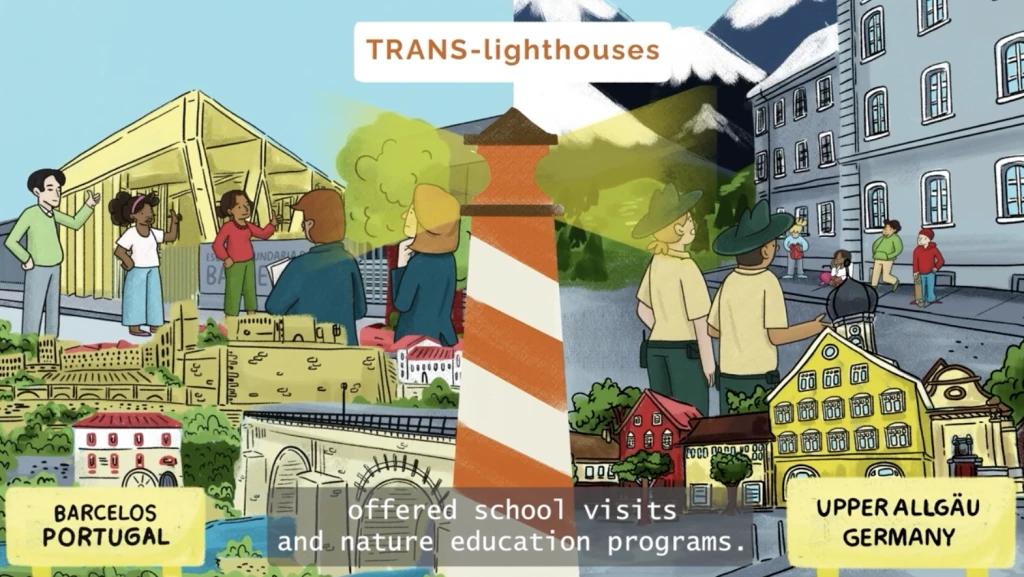
In Barcelos, we have followed the municipality’s efforts to green school playgrounds by replacing synthetic surfaces with trees, grass and natural play areas. As many readers know, this process was not only about redesigning physical space. It also required addressing concerns from parents and teachers about safety, responsibility and liability. Through awareness-raising sessions and a participatory process with students, perspectives shifted. Students developed proposals for nature-based playgrounds, the entire school community voted, and the selected designs are now being implemented across the pilot schools. The experience showed how cultural ideas of “safe” and “modern” can be revisited — and how pupils and experts could work together for both realistic and visionary solutions.
In Upper Allgäu, traditional school visits to the forest were not enough to maintain young people’s interest in caring for nature. We explore how the team moved towards a long-term, participatory approach, where students design activities, build practical skills and connect their work to local businesses. They found ways that phones and technology could support the experiences, rather than antagonising them. Over time, nature became a space for responsibility, leadership and belonging that youth actively sought to interact with.
The video distils these experiences into two clear messages. First, reconnecting children with nature requires space for exploration and managed risk, not only controlled environments. Second, nature will not automatically compete with indoor life and screens; it needs to be made meaningful through ownership, co-creation and continuity.
By sharing these lessons in a short and accessible format, the video helps extend the learning from our pilots beyond the project community — inviting municipalities, educators and practitioners to reflect on how nature-based solutions can include younger generations not as future beneficiaries, but as present participants.
Watch the video here: https://www.youtube.com/watch?v=pqLalxkX7Hc
Featured image
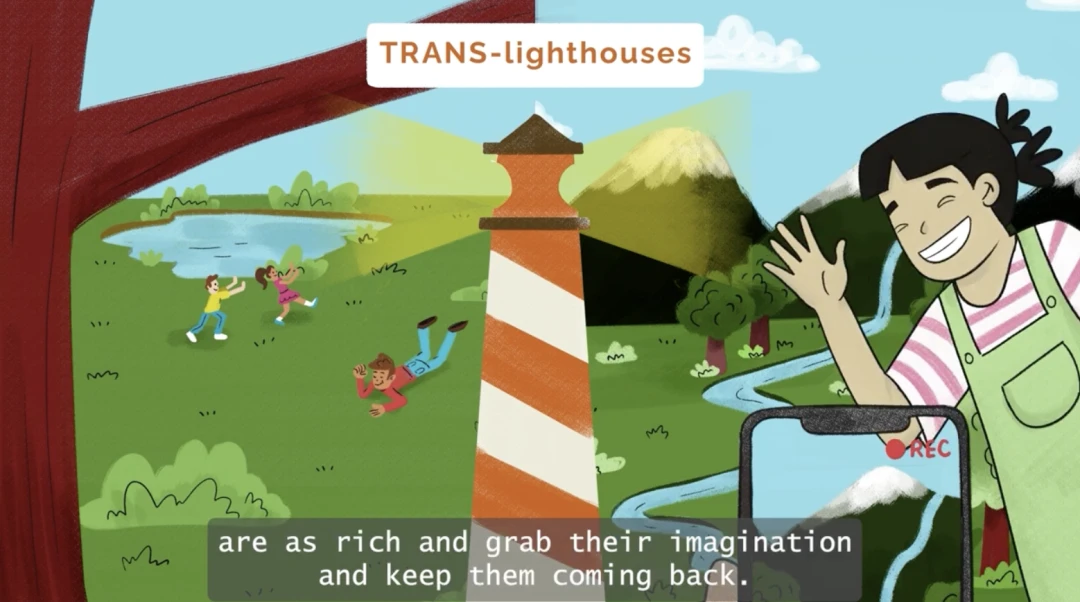
Reconnecting children with nature. Caption: Screenshot from the video ”Children, youth and Nature-Based Solutions”. Credits: Swedish International Centre for Local Democracy. Source: TRANS-lighthouses project.
Column image
From Portugal to Germany. Caption: Video screenshot highlighting how regenerative practices are described as “connecting people closer to the soil.” Credits: Swedish International Centre for Local Democracy. Source: TRANS-lighthouses project.
Key lessons on youth inclusion in NBS in 4 minutes
What does it really take to reconnect children and young people with nature? In this 4-minute video, lessons from TRANS-lighthouses pilot- and assessment cases are brought to life, showing how participation, managed risk and own agency can make nature-based solutions attractive for younger generations.
Across TRANS-lighthouses, pilots and consortium teams have explored what it takes to reconnect children and young people with nature. This new ICLD video brings those experiences together in an accessible format, highlighting key lessons from Barcelos in Portugal and Upper Allgäu in Germany.
In Barcelos, we have followed the municipality’s efforts to green school playgrounds by replacing synthetic surfaces with trees, grass and natural play areas. As many readers know, this process was not only about redesigning physical space. It also required addressing concerns from parents and teachers about safety, responsibility and liability. Through awareness-raising sessions and a participatory process with students, perspectives shifted. Students developed proposals for nature-based playgrounds, the entire school community voted, and the selected designs are now being implemented across the pilot schools. The experience showed how cultural ideas of “safe” and “modern” can be revisited — and how pupils and experts could work together for both realistic and visionary solutions.
In Upper Allgäu, traditional school visits to the forest were not enough to maintain young people’s interest in caring for nature. We explore how the team moved towards a long-term, participatory approach, where students design activities, build practical skills and connect their work to local businesses. They found ways that phones and technology could support the experiences, rather than antagonising them. Over time, nature became a space for responsibility, leadership and belonging that youth actively sought to interact with.
The video distils these experiences into two clear messages. First, reconnecting children with nature requires space for exploration and managed risk, not only controlled environments. Second, nature will not automatically compete with indoor life and screens; it needs to be made meaningful through ownership, co-creation and continuity.
By sharing these lessons in a short and accessible format, the video helps extend the learning from our pilots beyond the project community — inviting municipalities, educators and practitioners to reflect on how nature-based solutions can include younger generations not as future beneficiaries, but as present participants.
Watch the video here: https://www.youtube.com/watch?v=pqLalxkX7Hc
Featured image
Reconnecting children with nature. Caption: Screenshot from the video ”Children, youth and Nature-Based Solutions”. Credits: Swedish International Centre for Local Democracy. Source: TRANS-lighthouses project.
Column image
From Portugal to Germany. Caption: Video screenshot highlighting how regenerative practices are described as “connecting people closer to the soil.” Credits: Swedish International Centre for Local Democracy. Source: TRANS-lighthouses project.