TRANS-lighthouses Glossary
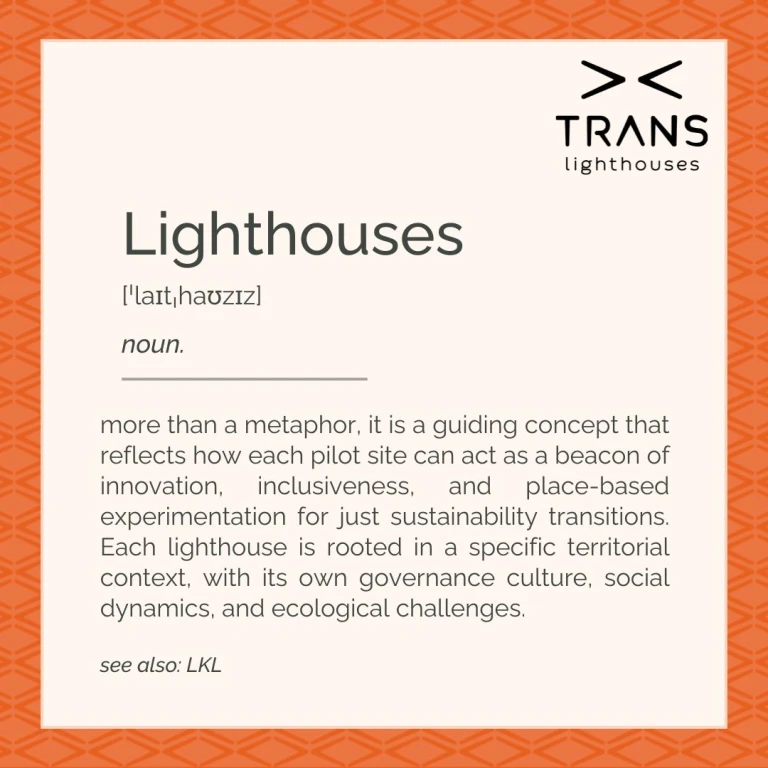
Lighthouses concept
In the TRANS-lighthouses project, the term “lighthouses” is more than a metaphor, it is a guiding concept that reflects how each pilot site can act as a beacon of innovation, inclusiveness, and place-based experimentation for just sustainability transitions. Each lighthouse is rooted in a specific territorial context, with its own governance culture, social dynamics, and ecological challenges. By designing and testing NBS in real-life settings, these pilots illuminate pathways forward for other regions facing similar environmental and social pressures.
Over the past months, the lighthouse pilots have progressed significantly in translating abstract goals into concrete, locally grounded actions. From co-creation workshops in Roskilde and Estarreja to the development of co-governance roadmaps in Azores and Strovolos, each lighthouse is actively shaping its own vision of transformation. Importantly, the emphasis is not on replicating one-size-fits-all models, but rather on demonstrating how context-sensitive innovation, grounded in local realities and led by communities, can spark long-term, systemic change.
As we move forward, the lighthouse concept is also guiding the project’s learning process. Each pilot not only implements solutions, but also contributes to cross-pilot reflection and shared learning across Europe. By the end of the project, these lighthouses will have not only tested innovations, but will have also generated transferable lessons, new governance models, and policy recommendations, ultimately lighting the way for broader climate resilience and social justice.
Text: Constantinos Kritiotis